

Tài liệu ôn thi chia sẻ tài liệu Hóa học 11 – Chương 4 Alkane hoàn toàn miễn phí. Tài liệu được biên soạn bám sát theo chương trình mới, bao gồm lý thuyết, bài tập luyện tập và lời giải chi tiết.
Tài liệu chương 3: Đại cương hóa học hữu cơ
Tài liệu chương Alkane (hóa 11)
Các chủ đề chính trong tài liệu
| Nội dung chính | Mô tả chi tiết |
|---|---|
| Khái niệm, Đồng phân, Danh pháp | Định nghĩa, công thức chung, đồng phân mạch carbon (từ  trở lên), bậc của carbon ( trở lên), bậc của carbon ( ), danh pháp thay thế (không nhánh và phân nhánh) và tên thông thường. ), danh pháp thay thế (không nhánh và phân nhánh) và tên thông thường. |
| Tính chất vật lí | Trạng thái ở điều kiện thường ( và neopentane là khí; và neopentane là khí;  (trừ neopentane) là lỏng; (trừ neopentane) là lỏng;  trở lên là rắn). Đặc điểm về độ tan (rất ít tan trong nước, tan tốt trong dung môi không phân cực) và nhiệt độ sôi (tăng theo trở lên là rắn). Đặc điểm về độ tan (rất ít tan trong nước, tan tốt trong dung môi không phân cực) và nhiệt độ sôi (tăng theo  , mạch không phân nhánh cao hơn mạch phân nhánh). , mạch không phân nhánh cao hơn mạch phân nhánh). |
| Tính chất hóa học | Phản ứng đặc trưng: thế halogen (ưu tiên thế vào  của của  bậc cao hơn), cracking (phân cắt bậc cao hơn), cracking (phân cắt  tạo hydrocarbon mạch ngắn hơn), reforming (chuyển mạch thẳng thành mạch nhánh/vòng), và oxi hóa (đốt cháy hoàn toàn/không hoàn toàn, oxi hóa không hoàn toàn trong công nghiệp). Lưu ý: Alkane không làm mất màu dung dịch tạo hydrocarbon mạch ngắn hơn), reforming (chuyển mạch thẳng thành mạch nhánh/vòng), và oxi hóa (đốt cháy hoàn toàn/không hoàn toàn, oxi hóa không hoàn toàn trong công nghiệp). Lưu ý: Alkane không làm mất màu dung dịch  . . |
| Nguồn, Điều chế và Ứng dụng | Nguồn chính: Dầu mỏ, khí thiên nhiên, khí mỏ dầu. Ứng dụng: Nhiên liệu, dung môi, dầu nhờn, nguyên liệu tổng hợp hữu cơ. |
| Vấn đề môi trường | Thảo luận về ô nhiễm không khí do khí thải giao thông ( , bụi mịn , bụi mịn  ) và các biện pháp hạn chế (nhiên liệu sạch, nhiên liệu sinh học, tiết kiệm năng lượng). ) và các biện pháp hạn chế (nhiên liệu sạch, nhiên liệu sinh học, tiết kiệm năng lượng). |
Bài tập & Ví dụ Minh họa
Phần bài tập rất phong phú, bao gồm các dạng bài:
- Xác định công thức phân tử và công thức cấu tạo: Dựa vào khối lượng phân tử, tỉ khối hơi so với
 , phần trăm khối lượng nguyên tố, và dữ kiện về số sản phẩm thế.
 - Viết đồng phân và gọi tên: Luyện tập với
 ,
,  ,
,  và các gốc alkyl.
 - Phản ứng hóa học: Viết phương trình cho phản ứng thế halogen của methane, cracking, reforming, và đốt cháy.
- Giải thích hiện tượng thực tế: Giải thích các vấn đề liên quan đến xăng dầu (bảo quản, tràn dầu, dập tắt đám cháy bằng nước) và tính chất vật lí (nhiệt độ sôi, butane trong bật lửa).
- Đánh giá chất lượng xăng: Tính chỉ số octane của các loại xăng (RON 92, RON 95, E5, E10).
So sánh số lượng dẫn xuất Monochloro
Phần trắc nghiệm và tự luận có nhiều câu hỏi về khả năng phản ứng thế. Dưới đây là tóm tắt khả năng tạo sản phẩm thế monochloro tối đa của các Alkane cụ thể (tỉ lệ 1:1, có chiếu sáng):
How 100FreeSpinsNoDeposit Explains No Deposit Bonus Mechanics in Australia
No deposit bonuses have become one of the most scrutinised promotional mechanics in the Australian online gambling market, attracting both casual players and regulatory attention in roughly equal measure. Unlike standard welcome bonuses that require an initial financial commitment, no deposit offers — particularly free spin packages — allow players to engage with real-money games without first funding an account. This distinction sounds simple on the surface, but the underlying mechanics involve layered wagering requirements, game contribution rates, maximum withdrawal caps, and eligibility filters that vary considerably from one operator to another. Understanding how these structures actually function, rather than how they are advertised, is essential for any Australian player trying to evaluate whether a given offer represents genuine value or a marketing exercise with little practical upside.
The Structural Anatomy of a No Deposit Free Spin Offer
At its most fundamental level, a no deposit free spin bonus grants a player a fixed number of spins on one or more designated slot titles without requiring a real-money deposit to trigger the offer. The spins themselves typically carry a fixed denomination — commonly between AUD 0.10 and AUD 0.20 per spin in the Australian market — which means 100 free spins at AUD 0.10 per spin yields a maximum theoretical spin value of AUD 10.00. This starting figure is important because it frames everything that follows: the wagering requirement multiplier is applied to the winnings generated from those spins, not to some inflated bonus amount.
Wagering requirements on no deposit free spin winnings in Australia typically range from 30x to 60x, though some operators have pushed this figure as high as 80x in recent years. A player who generates AUD 20.00 in winnings from their free spins and faces a 40x wagering requirement must wager AUD 800.00 in eligible games before any withdrawal becomes possible. This is where the game contribution rate becomes critical. Most operators assign a 100% contribution rate to slots, meaning every dollar wagered on a slot title counts fully toward clearing the requirement. Table games such as blackjack or roulette frequently carry contribution rates of 10% or even 0%, meaning they are effectively excluded from the clearing process for bonus funds.
The maximum withdrawal cap is the second major constraint players encounter. Even if a player successfully clears the wagering requirement, most no deposit free spin offers in Australia impose a ceiling on how much can be withdrawn from bonus-derived winnings. This cap commonly sits between AUD 50.00 and AUD 100.00, though some offers restrict withdrawals to as little as AUD 20.00. The practical consequence is that extraordinary luck — generating, say, AUD 500.00 from a bonus spin — does not translate into a AUD 500.00 withdrawal. The operator retains everything above the stated cap once wagering conditions are met.
Time limits add a further layer of complexity. Most Australian operators attach an expiry window to no deposit bonuses, typically ranging from 24 hours to 30 days from the moment the bonus is activated. If the wagering requirement is not cleared within this window, the bonus and any associated winnings are forfeited entirely. Some platforms reset the expiry clock from the date of account registration rather than the date of bonus activation, which can catch players off guard if they delay engaging with the offer.
How Australian Regulatory Frameworks Shape Bonus Availability
The legal landscape governing online gambling bonuses in Australia is defined primarily by the Interactive Gambling Act 2001 (IGA), which was substantially amended in 2017 to close loopholes that had allowed offshore operators to service Australian residents relatively openly. The 2017 amendments, introduced through the Interactive Gambling Amendment Act, made it explicitly illegal for unlicensed offshore operators to provide interactive gambling services to Australians, including the promotional bonuses used to attract new customers. This legislative tightening had a direct and measurable effect on the no deposit bonus market: many operators who had previously offered generous no deposit packages to Australian players either withdrew from the market entirely or restructured their operations to comply.
The Australian Communications and Media Authority (ACMA) has progressively expanded its enforcement activities since 2017, publishing regular lists of non-compliant services and working with internet service providers to block access to unlicensed gambling sites. By 2023, ACMA had actioned hundreds of complaints and directed ISPs to block dozens of offshore gambling websites. This enforcement environment means that the no deposit bonus offers available to Australian players today come predominantly from operators holding licences in jurisdictions such as Malta (under the Malta Gaming Authority), Gibraltar, or Curaçao, rather than from operators holding Australian licences under the Northern Territory Racing Commission or equivalent bodies.
It is within this regulatory context that resources like 100FreeSpinsNoDeposit online serve a genuinely informational function, cataloguing which no deposit offers are currently accessible to Australian players and explaining the specific terms attached to each promotion, given that the compliance picture changes frequently as operators adjust their market positioning.
The distinction between a licensed offshore operator and an unlicensed one matters practically to players because licensed operators are bound by the consumer protection standards of their licensing jurisdiction. MGA-licensed operators, for instance, are required to present bonus terms clearly and to process withdrawal requests within defined timeframes. Unlicensed operators carry no such obligations, which is why the source of a no deposit offer — not just its headline generosity — is a relevant consideration when assessing risk.
Responsible gambling provisions also interact with no deposit bonus mechanics in ways that are not always immediately apparent. Several jurisdictions that licence operators serving Australian players require those operators to allow players to set deposit limits, loss limits, and session time limits even when no deposit has been made. This means a player engaging with a no deposit free spin offer may still have access to self-exclusion tools and cooling-off periods, which represents a meaningful consumer protection layer that is absent from unlicensed platforms entirely.
Wagering Mathematics and the Expected Value of Free Spin Offers
Evaluating a no deposit free spin offer through an expected value lens requires understanding the return-to-player (RTP) percentages of the slot titles to which the spins are attached. RTP represents the theoretical percentage of all wagered money that a slot machine returns to players over an extended number of spins. A slot with a 96% RTP will, in theory, return AUD 96.00 for every AUD 100.00 wagered. This figure is calculated across millions of spins and does not predict individual session outcomes, but it is the correct input for modelling the expected cost of clearing a wagering requirement.
Consider a concrete scenario: a player receives 100 free spins at AUD 0.10 per spin on a slot with a 96% RTP. The expected winnings from the free spins themselves are AUD 10.00 × 0.96 = AUD 9.60. If the wagering requirement is 40x applied to winnings, the player must wager AUD 9.60 × 40 = AUD 384.00 to clear the bonus. At a 96% RTP, the expected loss during the wagering process is AUD 384.00 × 0.04 = AUD 15.36. Since the expected loss from wagering (AUD 15.36) exceeds the expected winnings from the free spins (AUD 9.60), the offer has a negative expected value for the player on average. The maximum withdrawal cap further constrains the upside that would be needed to compensate for this mathematical disadvantage.
This does not mean no deposit free spin offers are without value — variance works in both directions, and individual players do generate meaningful wins from these promotions. The mathematical analysis simply clarifies that the aggregate expected outcome across all players who claim a given offer favours the operator, which is the economic basis on which bonuses are offered in the first place. Operators fund no deposit promotions from the margin generated by wagering activity, not from altruism.
Some operators restrict no deposit free spins to slots with RTPs below the industry average, sometimes as low as 92% or 93%, which widens the mathematical gap further. A player who understands RTP figures can identify this practice by checking the paytable or help section of the designated game. Reputable operators typically make RTP information accessible within the game interface, and in some licensing jurisdictions, disclosure of RTP is a regulatory requirement rather than a voluntary practice.
Volatility — also referred to as variance — is a separate but related concept that affects how no deposit free spin offers play out in practice. High-volatility slots produce infrequent but large wins, while low-volatility slots produce more frequent but smaller wins. For the purpose of clearing a wagering requirement within a time limit, low-volatility slots are generally more suitable because they generate a steadier stream of wagers from a given bankroll. High-volatility slots carry a greater risk of depleting bonus funds before the wagering requirement is met, even if they occasionally produce wins large enough to hit the maximum withdrawal cap.
How Bonus Terms Have Evolved in the Australian Market Since 2018
The no deposit bonus landscape in Australia has undergone considerable change since 2018, driven by a combination of regulatory pressure, increased player sophistication, and shifts in operator strategy. In the period immediately following the 2017 IGA amendments, many operators who continued to accept Australian players tightened their bonus terms significantly, raising wagering requirements and lowering maximum withdrawal caps as a way of managing the financial risk associated with offering promotions in a legally ambiguous market.
Between 2018 and 2020, the average wagering requirement attached to no deposit free spin offers in the Australian market rose from approximately 30x to 40x, according to industry tracking data from bonus comparison platforms. Maximum withdrawal caps during the same period fell from a common ceiling of AUD 100.00 to AUD 50.00 at many operators. These changes reflected both increased caution on the part of operators and a broader industry trend toward tighter bonus terms that followed regulatory crackdowns in European markets, particularly in the United Kingdom, where the UK Gambling Commission introduced its own bonus restrictions in 2018 and 2019.
The introduction of mandatory affordability checks and enhanced know-your-customer (KYC) requirements in several licensing jurisdictions has also affected how no deposit bonuses are administered. Players claiming no deposit offers are now more frequently required to complete identity verification before withdrawing any winnings, even when no deposit has been made. This verification process — which typically requires submission of government-issued identification and proof of address — can take anywhere from a few hours to several days, during which the bonus expiry clock continues to run. Some operators have responded by pausing the bonus timer during the verification window; others have not, which represents a material difference in the effective terms of otherwise similar offers.
A notable development from 2021 onward has been the growth of no deposit bonus aggregation and review platforms specifically oriented toward the Australian market. These platforms, of which 100FreeSpinsNoDeposit is one example, have moved beyond simple offer listings to provide detailed breakdowns of wagering requirements, game restrictions, withdrawal caps, and verification procedures. This shift toward greater transparency has been partly driven by player demand and partly by the recognition that players who understand bonus mechanics are less likely to generate disputes or chargebacks — outcomes that create regulatory risk for operators.
The game selection attached to no deposit free spin offers has also evolved. In the early years of the Australian online casino market, free spins were almost exclusively attached to NetEnt or Microgaming titles, reflecting those developers’ dominance of the licensed operator ecosystem. By 2022 and 2023, the range of software providers whose games appeared in no deposit offers had expanded considerably, with titles from Pragmatic Play, Play’n GO, Yggdrasil, and Nolimit City appearing regularly. This diversification has made it easier for players to assess the RTP and volatility characteristics of the designated games before deciding whether to claim an offer, since detailed game information for these providers is widely available through independent review sources.
Geolocation technology has become a standard tool for enforcing eligibility restrictions on no deposit bonuses. Operators use IP address detection and, in some cases, GPS data from mobile devices to verify that a player is located in a jurisdiction where the offer is permitted. Australian players accessing offshore platforms via VPN services may find that their bonus claims are voided if the operator detects a discrepancy between the registered account location and the actual connection point. This is a practical risk that players should be aware of, since it can result in the forfeiture of winnings generated from a claimed bonus.
Payment method restrictions represent a final category of term that has grown more common in recent years. Some operators exclude players who make their first deposit using certain e-wallets — particularly PayPal, Skrill, and Neteller — from eligibility for no deposit bonuses or from converting bonus winnings into withdrawable funds via those same methods. This restriction is typically disclosed in the bonus terms and conditions but is frequently overlooked by players focused on the headline offer. Understanding the full chain of eligibility conditions — from account registration through to withdrawal — is the only reliable way to assess whether a no deposit free spin offer is practically accessible given a player’s specific circumstances and preferred payment methods.
The mechanics of no deposit bonuses in Australia are not inherently opaque, but they are deliberately complex in ways that reward careful reading and penalise assumptions. The gap between a bonus’s advertised headline and its actual accessible value is determined by the interaction of wagering requirements, game RTP, volatility, time limits, withdrawal caps, and eligibility conditions — each of which operates independently and compounds the others. Players who approach these offers with a clear understanding of the underlying mathematics and regulatory context are positioned to make informed decisions about whether and how to engage with them, rather than discovering the constraints only after the fact.
| Alkane | Công thức phân tử | Số đồng phân thế monochloro tối đa |
|---|---|---|
| Methane |  |
1 |
| Ethane |  |
1 |
| Propane |  |
2 |
| Butane |  |
2 |
| 2-methylpropane (Isobutane) | |
2 |
| Pentane |  |
3 |
| 2-methylbutane (Isopentane) | |
4 |
| 2,2-dimethylpropane (Neopentane) | |
1 |
| 2,2-dimethylbutane |  |
3 |
| 2,3-dimethylbutane | |
2 |
| 2,3,4-trimethylpentane |  |
4 |
Minh họa tài liệu
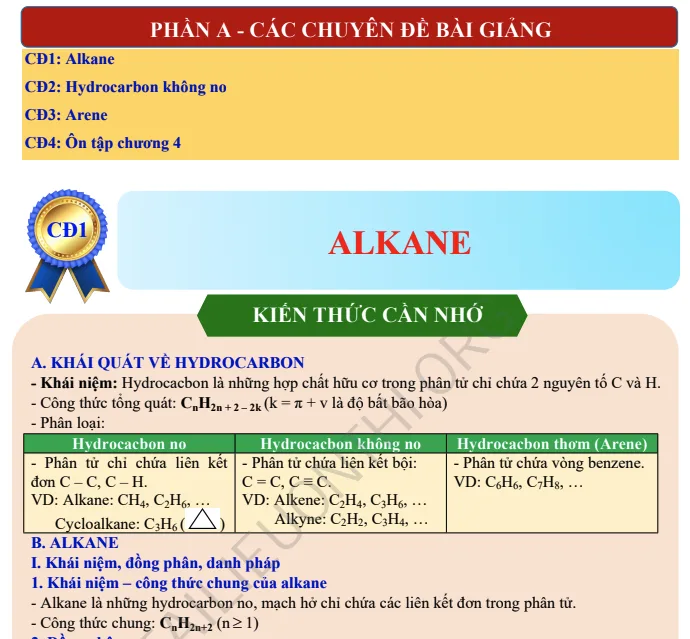
Tải tài liệu Hóa học 11 Chương 4 Alkane
Các bài đã nêu trên của chuyên đề này đã được chia thành các chủ đề nhỏ cho các bạn dễ theo dõi và học nhé
TẢI TÀI LIỆU HÓA 11 CHƯƠNG 4 (ĐỀ + ĐÁP ÁN)
Mọi người muốn đóng góp tài liệu, góp ý tài liệu lỗi, khiếu nại bản quyền có thể liên hệ mình qua Fanpage HẬU HỌC TẬP hoặc TÀI LIỆU ÔN THI nhé.
