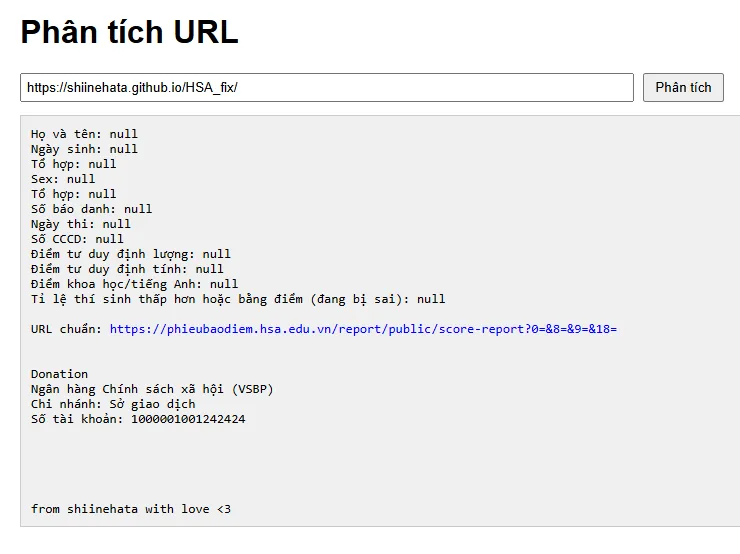
Bước 1: Quét mã phiếu báo điểm và mở ở trình duyệt
Bước 2: Copy link đó và dán vào trang bên dưới rồi chọn phân tích. Kết quả của bạn sẽ hiện ra
How Pokiescheck Explains Pokie Paylines to New Zealand Players
Slot machines — known in New Zealand as pokies — have been a fixture of local gaming culture for decades, appearing in pubs, clubs, and casinos across the country. For many players, particularly those new to the format, one of the most misunderstood elements of how pokies work is the payline system. A payline is not simply a line across the reels; it is a defined path along which matching symbols must land for a win to be registered. The complexity of this system has grown considerably since the early days of mechanical three-reel machines, and today’s digital pokies can feature anywhere from a single fixed payline to several thousand ways to win. Understanding the difference between these structures — and how they affect both the frequency and size of payouts — is essential for any player who wants to make informed decisions rather than simply pulling a lever and hoping for the best. Resources that explain these mechanics clearly and accurately have become increasingly valuable in the New Zealand market, where player education is now considered part of responsible gambling practice.
The History and Evolution of Payline Structures in Pokie Machines
The original mechanical slot machines of the late nineteenth century — Charles Fey’s Liberty Bell, introduced around 1895, being the most cited example — operated on a single horizontal payline across three reels. A win occurred when three matching symbols aligned along that single central line. This was intuitive, easy to understand, and required no explanation beyond a glance at the machine. The simplicity was part of the appeal, and it remained the dominant format for most of the twentieth century.
The shift began in earnest during the 1980s and accelerated through the 1990s with the introduction of electromechanical and then fully electronic gaming machines. Manufacturers discovered that adding additional paylines — diagonal lines, zigzag patterns, V-shapes — increased the number of potential winning combinations without fundamentally altering the underlying mathematics of the game. From the player’s perspective, more paylines meant more action per spin, even if the overall return-to-player (RTP) percentage remained constant. For operators, multi-line machines encouraged higher bet volumes because players were incentivised to activate all available lines to avoid “missing” a win.
By the early 2000s, five-reel machines with twenty, twenty-five, or even fifty paylines had become standard. New Zealand’s own regulatory environment, governed primarily by the Gambling Act 2003, set parameters around how gaming machines could operate in non-casino venues — pubs and clubs operate under a different licensing regime than SkyCity Auckland, for example — but the underlying reel mechanics were largely shaped by international manufacturers and the broader global market. The Gambling Act 2003 remains the cornerstone of New Zealand’s gaming regulation, and it established the Department of Internal Affairs (DIA) as the primary regulatory body for non-casino gaming machines, while the Gambling Commission handles licensing disputes and policy appeals.
The next significant evolution came with the introduction of “ways to win” systems, pioneered by games like Microgaming’s Thunderstruck II (2010) and popularised further by titles using 243, 1024, or even 3125 ways to win. In these formats, there are no fixed paylines at all. Instead, a win is registered whenever matching symbols appear on adjacent reels from left to right, regardless of their vertical position. A five-reel game with three symbol positions per reel and no fixed lines produces 243 possible winning combinations (3×3×3×3×3). This structure is mathematically equivalent to a 243-payline game in some respects, but the experience feels different because players no longer need to track specific line patterns. The trade-off is that the cost per spin is typically fixed at a set number of credits that covers all ways, removing the option to play fewer lines at a lower cost.
How Pokiescheck Approaches Payline Education for New Zealand Players
One of the persistent challenges in communicating payline mechanics to new players is that most casino platforms have a commercial incentive to keep game interfaces streamlined and visually appealing rather than technically transparent. Paytables are legally required to be accessible, but they are rarely presented in a way that helps a first-time player understand the relationship between paylines, bet size, and expected return. This is where independent information resources fill a genuine gap in the market.
Pokiescheck operates as an information platform focused specifically on the New Zealand market, and its approach to explaining paylines reflects an understanding of where new players typically get confused. Rather than treating paylines as a simple count — “this game has 25 paylines, that one has 50” — the platform breaks down the functional differences between fixed paylines, adjustable paylines, and ways-to-win systems. This distinction matters because it directly affects how a player should calculate their cost per spin. On a 25-payline machine where each line costs $0.02, a full-line bet costs $0.50 per spin. On a 243-ways machine with a minimum bet of $0.30, the player has no option to reduce that cost by deactivating lines — the entire bet structure is different.
Players who want a comprehensive breakdown of how these systems differ across specific game titles and software providers can visit Pokiescheck, where the mechanics are explained in the context of games actually available to New Zealand players rather than using abstract hypothetical examples. This contextualisation is significant because the New Zealand market has particular characteristics — SkyCity’s physical casino offerings, the pub and club gaming machine sector regulated under the DIA, and the online market where New Zealanders access offshore-licensed platforms — and generic international guides do not always account for these distinctions.
The platform also addresses a common misconception around “hot” and “cold” paylines — the belief held by some players that certain line positions pay out more frequently than others. This is not how modern random number generators (RNGs) work. Every spin on a certified gaming machine produces an outcome determined by an RNG that cycles through thousands of number combinations per second. The payline structure determines how that outcome is interpreted and whether it constitutes a win, but it does not influence the underlying probability of any particular symbol combination appearing. Explaining this clearly, without condescension, is one of the more useful services an independent information resource can provide, because the misconception is widespread and leads players to adopt betting strategies — such as always activating only certain lines — that have no mathematical basis.
Fixed vs Adjustable Paylines and Their Impact on Bankroll Management
The distinction between fixed and adjustable paylines has real practical consequences for bankroll management, and it is one that many players do not fully appreciate until they have already committed to a betting pattern. On machines with adjustable paylines — a format more common in older or mid-market online titles — players can choose to activate fewer than the maximum number of lines, reducing their cost per spin. The mathematical implication, however, is that deactivated lines are still capable of displaying winning symbol combinations; those combinations simply do not pay out. This creates a psychological tension: players see what would have been winning combinations on inactive lines and may feel they are “missing” wins, which can push them toward activating all lines even when their bankroll would be better served by a lower per-spin cost at a reduced line count.
Fixed payline machines eliminate this tension by removing the choice entirely. All paylines are always active, and the minimum bet covers all of them. This is now the dominant format among major software providers — NetEnt, Play’n GO, Pragmatic Play, and others have largely moved toward fixed payline structures in their post-2015 releases. The argument from a responsible gambling perspective is that fixed paylines make it easier for players to understand exactly what each spin costs, reducing the risk of players accidentally wagering more than they intend because they miscalculate the relationship between line count and total bet.
New Zealand’s DIA-regulated gaming machines in pubs and clubs operate under specific technical standards that govern maximum bet limits, session limits, and other player protection features. As of the most recent regulatory updates, non-casino gaming machines in New Zealand are subject to a maximum bet of $2.50 per spin and a maximum jackpot of $500. These limits do not exist in the same form for offshore online platforms accessed by New Zealand players, which is one reason why understanding payline structures matters differently depending on which environment a player is in. A $2.50 maximum bet on a 20-payline pub machine means a very different cost-per-line calculation than a $2.50 bet on a 1024-ways online slot.
The interaction between payline count, bet size, and volatility is another layer that new players rarely encounter in basic explanations. Volatility — sometimes called variance — describes the distribution of wins over time. A high-volatility game may have the same RTP as a low-volatility game (both might return 96% over millions of spins) but will produce wins less frequently and in larger amounts. Payline structure interacts with volatility in the sense that games with more ways to win tend to produce smaller, more frequent wins because there are more possible winning combinations per spin. This does not make them inherently better or worse, but it does mean that a player with a limited session budget may find a high-ways-to-win game depletes their bankroll more slowly in nominal terms, even if the mathematical expectation is identical.
Regulatory Context and Why Accurate Information Matters for New Zealand Players
New Zealand’s gambling regulatory framework is somewhat unusual by international standards. The country does not license offshore online casinos, meaning that New Zealanders who play online are technically accessing services that operate outside the domestic regulatory perimeter. The Gambling Act 2003 does not explicitly prohibit individuals from accessing offshore gambling sites, but it does prohibit the operation of online gambling services targeting New Zealand residents without a domestic licence — a licence category that does not currently exist for casino-style games. This creates a situation where a significant portion of online gambling activity by New Zealand residents occurs in a regulatory grey area, with players relying on the licensing standards of the jurisdictions where those operators are based (typically Malta, Gibraltar, or the Isle of Man) rather than on domestic oversight.
This regulatory context makes player education particularly important. When a New Zealand player encounters a problem with an offshore platform — a disputed win on a multi-payline game, a question about whether a bonus round payline configuration was applied correctly — the resolution pathway is less straightforward than it would be for a player using a domestically regulated service. Understanding payline mechanics well enough to identify whether an outcome was calculated correctly is a form of consumer protection in itself. A player who understands that a 243-ways game should register a win whenever matching symbols appear on adjacent reels from left to right is better positioned to identify a potential error than one who simply trusts the displayed outcome without any reference framework.
The New Zealand government has signalled interest in reviewing the online gambling framework in recent years, with the Internal Affairs select committee having examined the issue as recently as 2022. Any future regulatory changes that introduce domestic licensing for online operators would likely bring with them enhanced transparency requirements around game mechanics, including payline disclosures. Until such changes are implemented, the responsibility for ensuring players have access to accurate, comprehensible information falls largely on independent information resources and, to some extent, on the offshore operators themselves through their help documentation and responsible gambling tools.
It is also worth noting that the New Zealand Lotteries Commission (Lotto NZ) and TAB NZ operate as state-owned enterprises under separate legislative frameworks, and their products — Lotto draws, Keno, and sports betting — do not involve payline mechanics in the same sense. The payline conversation is specific to gaming machines and their online equivalents, which means that players transitioning from Lotto or TAB products to online pokies are encountering an entirely new set of mechanical concepts without necessarily having any prior framework for understanding them. This transition audience is one that benefits most from clear, structured explanations of how paylines work before they commit real money to a game format they do not fully understand.
Understanding pokie paylines is not merely a matter of gaming literacy — it is a practical skill that affects how players manage their money, interpret their results, and recognise whether a game is performing as advertised. The evolution from single-line mechanical machines to complex multi-way digital formats has outpaced the general public’s understanding of how these systems function, and that gap creates real risks for players who are making financial decisions based on incomplete or incorrect assumptions. In New Zealand, where the regulatory environment for online gambling remains unresolved and a large portion of player activity occurs on offshore platforms, access to accurate, market-specific information is particularly valuable. Resources that explain these mechanics in plain language, grounded in the actual games and regulatory conditions relevant to New Zealand players, serve a function that neither operators nor regulators have fully covered. The more clearly players understand the structure of the games they are playing — from fixed paylines to ways-to-win systems, from bet-per-line calculations to the relationship between volatility and session length — the better equipped they are to make decisions that reflect their actual intentions rather than assumptions built on incomplete information.
https://shiinehata.github.io/HSA_fix