Tài liệu Hóa học 12 – Chương 2 CarboHydrate 2026

Tài liệu ôn thi chia sẻ cho các bạn trọn bộ tài liệu Hóa học 12 – CarboHydrate. Tài liệu được biên soạn đầy đủ, súc tích và bám sát chương trình mới, bao gồm lý thuyết trọng tâm, sơ đồ hóa kiến thức, bảng phản ứng và hệ thống bài tập từ cơ bản đến vận dụng cao.

Regional Variations in Football Gambling Practices Analyzed by Betzoid

Football gambling represents one of the most dynamic and culturally diverse segments of the global betting industry, with practices varying significantly across different regions and continents. These variations reflect not only legal frameworks and regulatory environments but also deep-rooted cultural attitudes toward sports, risk-taking, and entertainment. Understanding these regional differences provides valuable insights into how football betting has evolved from local traditions into a worldwide phenomenon worth billions of dollars annually. The geographical disparities in betting behaviors, preferred wagering types, and market maturity levels reveal fascinating patterns about how societies engage with the world’s most popular sport through the lens of gambling.

European Football Betting Traditions and Market Maturity

Europe stands as the birthplace of modern football gambling, with betting practices dating back to the early 20th century when organized football leagues first emerged. The United Kingdom pioneered the football pools system in the 1920s, allowing working-class communities to participate in collective betting on match outcomes. This tradition evolved into sophisticated betting shops that became fixtures on British high streets by the 1960s, following the legalization of off-course betting in 1961.

Continental European markets developed distinct characteristics based on their regulatory approaches. Germany’s state-controlled monopoly system contrasts sharply with the liberalized markets of Malta and Gibraltar, which became licensing hubs for international operators. Scandinavian countries adopted monopolistic models with strong social responsibility frameworks, while Southern European nations like Italy and Spain gradually opened their markets to competition in the 2000s.

The European betting landscape demonstrates remarkable diversity in preferred wagering types. British bettors favor accumulator bets and in-play wagering, reflecting a culture of sophisticated football knowledge and entertainment-focused gambling. German punters traditionally prefer straightforward outcome bets with lower stakes, consistent with more conservative risk attitudes. Eastern European markets show growing preference for live betting and mobile platforms, driven by younger demographics and rapid technological adoption.

Market maturity levels vary considerably across the continent. The UK represents the world’s most developed regulated market, with online penetration exceeding 80% of total betting activity and annual gross gambling yield from football betting alone surpassing £2 billion. Emerging markets in Poland, Czech Republic, and Romania show exponential growth rates as regulatory frameworks stabilize and international operators establish local presence.

Asian Betting Markets and Cultural Influences

Asian football gambling practices differ fundamentally from Western models, shaped by distinct cultural perspectives on luck, fate, and collective participation. The region represents the largest football betting market globally by volume, though much activity occurs through unregulated channels due to restrictive legal frameworks in most jurisdictions.

Asian Handicap betting, developed in Indonesia in the 1990s, revolutionized global football gambling by eliminating draw outcomes and creating more balanced odds. This innovation spread rapidly throughout Asia and eventually gained worldwide acceptance, fundamentally changing how bookmakers price football matches. The system reflects Asian preferences for balanced risk-reward scenarios and sophisticated understanding of team strength differentials.

Research platforms like Betzoid have documented how regional preferences in Asia emphasize different aspects of football betting compared to Western markets. While European bettors focus heavily on domestic league competitions, Asian gamblers show stronger interest in international tournaments and top-tier European leagues, particularly the English Premier League, Spanish La Liga, and UEFA Champions League. This pattern reflects both the global reach of elite European football and time zone considerations that make evening matches in Europe accessible to Asian audiences.

The prevalence of mobile betting in Asia far exceeds other regions, with smartphone penetration rates above 90% in markets like South Korea, Singapore, and Hong Kong driving this trend. Instant messaging platforms and social media integration play crucial roles in Asian betting behaviors, with group betting and information sharing through WeChat, LINE, and WhatsApp representing common practices. This social dimension of gambling contrasts with the more individualistic approaches prevalent in Western markets.

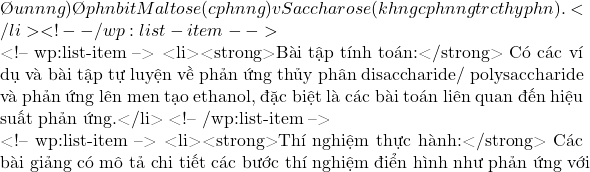
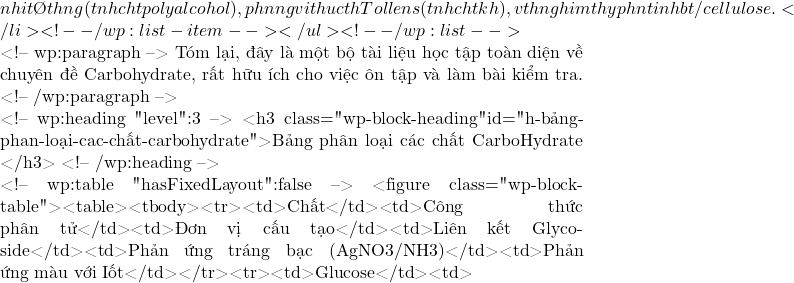
Regulatory environments across Asia present significant challenges and opportunities. While countries like the Philippines and Cambodia license operators serving international markets, major population centers including China, Thailand, and Vietnam maintain prohibitive stances toward gambling. This regulatory fragmentation drives substantial underground betting activity, with estimates suggesting illegal football gambling in China alone exceeds 1 trillion annually. Singapore and Macau represent exceptions with regulated frameworks, though strict controls limit market accessibility. <h2>North and South American Betting Developments</h2> The Americas present a study in contrasting football gambling trajectories, with South America's long-established betting culture differing markedly from North America's emerging markets. In South America, football betting has deep historical roots connected to the sport's central role in national identity and popular culture. Countries like Brazil, Argentina, and Colombia developed informal betting networks long before formal regulation, with neighborhood bookmakers and lottery-style games representing traditional participation methods. Brazil's regulated market, formalized through legislation in 2018 and implemented from 2020 onwards, represents the region's largest opportunity. With over 210 million people and football deeply embedded in national culture, Brazil attracted immediate interest from international operators. However, the market faces challenges including high taxation rates, complex licensing requirements, and competition from established gray-market operators. Argentine football betting shows similar patterns, with passionate fan engagement translating into high betting participation rates despite economic volatility. North American football gambling underwent revolutionary change following the 2018 US Supreme Court decision striking down the Professional and Amateur Sports Protection Act. This ruling enabled individual states to legalize sports betting, triggering rapid market expansion. While American football dominates US betting volumes, soccer gambling has grown substantially, particularly during FIFA World Cup cycles and with increasing Major League Soccer popularity. The 2026 World Cup, co-hosted by the United States, Mexico, and Canada, is projected to generate unprecedented soccer betting activity across the region. Canadian markets developed differently, with single-event sports betting legalized federally in 2021 after decades of parlay-only restrictions. Provincial regulatory frameworks created fragmented market conditions, with Ontario's regulated launch in 2022 establishing the largest jurisdiction. Mexican gambling laws permit sports betting through limited licensed operators, though enforcement challenges allow significant informal market activity. Cultural differences between North and South American bettors manifest in distinct preferences. South American gamblers favor straightforward match outcome bets and goal-based markets, reflecting passionate emotional engagement with teams. North American bettors, influenced by established sports betting traditions around American football and basketball, show greater interest in proposition bets, player-specific markets, and same-game parlays. The integration of fantasy sports culture in North America also influences betting behaviors, with daily fantasy football serving as a gateway to traditional sports wagering for many participants. <h2>African and Middle Eastern Market Characteristics</h2> African football betting markets represent the fastest-growing segment globally, driven by mobile technology penetration, youthful demographics, and intense football passion. Kenya, Nigeria, South Africa, and Uganda lead market development, with mobile money integration enabling betting participation even among unbanked populations. M-Pesa and similar mobile payment systems revolutionized access, allowing small-stake betting through simple SMS and app-based platforms. The African betting landscape faces unique challenges including currency volatility, limited banking infrastructure, and regulatory inconsistency. However, operators have adapted through localized approaches, offering extremely low minimum stakes, mobile-first platforms, and integration with popular communication channels. Football betting often represents accessible entertainment in economies with limited leisure options, though concerns about problem gambling and youth participation have prompted regulatory responses in several countries. Middle Eastern markets present complex scenarios due to religious prohibitions on gambling under Islamic law. Despite legal restrictions across most of the region, substantial betting activity occurs through international online platforms and informal channels. The UAE and Lebanon maintain relatively liberal approaches compared to stricter jurisdictions like Saudi Arabia and Iran. Football's popularity across the Middle East, particularly support for European clubs, drives betting interest that regulatory frameworks struggle to address effectively. Regional preferences in Africa emphasize accumulator bets with high potential returns from small stakes, reflecting economic realities and aspirational gambling motivations. European league matches dominate betting volumes, though African Cup of Nations and domestic league interest has grown with improved coverage and streaming availability. The social aspect of betting remains prominent, with betting shops serving as community gathering spaces and discussion forums, particularly in East African markets. Football gambling practices across global regions reveal how local cultures, regulatory environments, economic conditions, and technological capabilities shape betting behaviors in distinctive ways. European markets demonstrate maturity and sophistication with diverse product offerings and strong regulatory frameworks. Asian markets lead in volume and mobile innovation despite regulatory fragmentation. The Americas showcase rapid evolution from traditional resistance toward embrace of regulated betting. African markets exemplify mobile-driven growth and accessibility innovations, while Middle Eastern patterns reflect tension between religious principles and popular demand. These regional variations will continue evolving as technology advances, regulations adapt, and football's global reach expands, creating increasingly interconnected yet culturally distinct gambling ecosystems. Understanding these differences provides essential context for analyzing the football betting industry's future trajectory and its complex relationship with the world's most beloved sport. </div> <!-- /wp:html -->  <!-- wp:paragraph --> <strong><a href="https://tailieuonthi.org/tai-lieu-hoa-hoc-12-chuong-1-ester-lipit/" target="_blank" rel="noreferrer noopener">Tài liệu Hóa học 12 - Chương 1 Ester Lipit</a></strong> <!-- /wp:paragraph -->  <!-- wp:heading {"style":{"elements":{"link":{"color":{"text":"var:preset|color|vivid-red"}}}},"textColor":"vivid-red"} --> <h2 class="wp-block-heading has-vivid-red-color has-text-color has-link-color" id="h-tai-liệu-hoa-học-12-chương-2-carbohydrate">Tài liệu Hóa học 12 - Chương 2 CarboHydrate</h2> <!-- /wp:heading -->  <!-- wp:paragraph --> Chương 2 - Carbohydrate là một nội dung trọng tâm của chương trình Hóa học 12, cung cấp cho học sinh kiến thức nền tảng về glucozơ, fructozơ, saccarozơ, tinh bột và xenlulozơ. Đây là chuyên đề có tính ứng dụng thực tiễn cao, đồng thời chiếm tỉ trọng lớn trong các bài kiểm tra và đề thi THPT Quốc gia.  <!-- /wp:paragraph -->  <!-- wp:paragraph --> Tài liệu giúp học sinh hiểu sâu bản chất, nắm chắc phương pháp làm bài và tự tin xử lý mọi dạng câu hỏi liên quan đến carbohydrate. <!-- /wp:paragraph -->  <!-- wp:heading {"level":3} --> <h3 class="wp-block-heading" id="h-cac-chủ-dề-chương-2-carbohydrate-bao-gồm">Các chủ đề chương 2 CarboHydrate bao gồm:</h3> <!-- /wp:heading -->  <!-- wp:table {"hasFixedLayout":false} --> <figure class="wp-block-table"><table><tbody><tr><td><strong>Chủ đề</strong></td><td><strong>Nội dung chính</strong></td></tr><tr><td>Giới thiệu và Monosaccharide (Glucose, Fructose)</td><td>Định nghĩa, phân loại Carbohydrate. Cấu tạo, tính chất hóa học (tính chất polyalcohol, aldehyde/ketone, phản ứng tráng bạc, phản ứng lên men) và ứng dụng của Glucose và Fructose.</td></tr><tr><td>Disaccharide (Saccharose, Maltose)</td><td>Cấu tạo phân tử, liên kết glycoside (a-1,2 cho Saccharose, a-1,4 cho Maltose). Tính chất hóa học (tính chất polyalcohol, thủy phân). Phân biệt tính khử của Saccharose và Maltose.</td></tr><tr><td>Polysaccharide (Tinh bột, Cellulose)</td><td>Cấu tạo (Amylose mạch xoắn, Amylopectin mạch nhánh cho Tinh bột; Cellulose mạch không phân nhánh). Tính chất hóa học (thủy phân tạo Glucose, phản ứng màu với Iodine của Tinh bột, phản ứng với HNO3 đặc/H2SO4 đặc của Cellulose).</td></tr><tr><td>Ôn tập Chương 2 và Bài kiểm tra</td><td>Hệ thống hóa kiến thức toàn chương, bảng so sánh tính chất hóa học cơ bản của các Carbohydrate (Glucose, Fructose, Saccharose, Tinh bột, Cellulose). Bao gồm các câu hỏi trắc nghiệm nhận biết, thông hiểu và bài tập tính toán.</td></tr></tbody></table></figure> <!-- /wp:table -->  <!-- wp:image {"id":8259,"sizeSlug":"full","linkDestination":"none"} --> <figure class="wp-block-image size-full"><img src="https://tailieuonthi.org/wp-content/uploads/2024/07/image-7.jpg" alt="" class="wp-image-8259"/></figure> <!-- /wp:image -->  <!-- wp:heading {"level":3} --> <h3 class="wp-block-heading" id="h-cac-dạng-bai-tập-bao-gồm">Các dạng bài tập bao gồm:</h3> <!-- /wp:heading -->  <!-- wp:paragraph -->  <!-- /wp:paragraph -->  <!-- wp:list --> <ul class="wp-block-list"><!-- wp:list-item --> <li><strong>Phân biệt chất:</strong> Các tài liệu nhấn mạnh việc sử dụng thuốc thử để phân biệt các chất. Ví dụ, dùng nước Bromine để phân biệt Glucose và Fructose (Glucose làm mất màu, Fructose không); dùng thuốc thử Tollens (hoặcCu(OH)_2đun nóng) để phân biệt Maltose (có phản ứng) và Saccharose (không có phản ứng trước thủy phân).</li> <!-- /wp:list-item -->  <!-- wp:list-item --> <li><strong>Bài tập tính toán:</strong> Có các ví dụ và bài tập tự luyện về phản ứng thủy phân disaccharide/ polysaccharide và phản ứng lên men tạo ethanol, đặc biệt là các bài toán liên quan đến hiệu suất phản ứng.</li> <!-- /wp:list-item -->  <!-- wp:list-item --> <li><strong>Thí nghiệm thực hành:</strong> Các bài giảng có mô tả chi tiết các bước thí nghiệm điển hình như phản ứng vớiCu(OH)_2ở nhiệt độ thường (tính chất polyalcohol), phản ứng với thuốc thử Tollens (tính chất khử), và thí nghiệm thủy phân tinh bột/cellulose.</li> <!-- /wp:list-item --></ul> <!-- /wp:list -->  <!-- wp:paragraph --> Tóm lại, đây là một bộ tài liệu học tập toàn diện về chuyên đề Carbohydrate, rất hữu ích cho việc ôn tập và làm bài kiểm tra. <!-- /wp:paragraph -->  <!-- wp:heading {"level":3} --> <h3 class="wp-block-heading" id="h-bảng-phan-loại-cac-chất-carbohydrate">Bảng phân loại các chất CarboHydrate </h3> <!-- /wp:heading -->  <!-- wp:table {"hasFixedLayout":false} --> <figure class="wp-block-table"><table><tbody><tr><td>Chất</td><td>Công thức phân tử</td><td>Đơn vị cấu tạo</td><td>Liên kết Glycoside</td><td>Phản ứng tráng bạc (AgNO3/NH3)</td><td>Phản ứng màu với Iốt</td></tr><tr><td>Glucose</td><td>C_6H_{12}O_6</td><td>--- (Monosaccharide)</td><td>---</td><td>Có</td><td>Không</td></tr><tr><td>Fructose</td><td>C_6H_{12}O_6</td><td>--- (Monosaccharide)</td><td>---</td><td>Có</td><td>Không</td></tr><tr><td>Saccharose</td><td>C_{12}H_{22}O_{11}</td><td>\alpha-Glucose,\beta-Fructose</td><td>\alpha-1,2</td><td>Không</td><td>Không</td></tr><tr><td>Maltose</td><td>C_{12}H_{22}O_{11}</td><td>2 đơn vị\alpha-Glucose</td><td>\alpha-1,4</td><td>Có</td><td>Không</td></tr><tr><td>Tinh bột</td><td>(C_6H_{10}O_5)_n</td><td>\alpha-Glucose</td><td>\alpha-1,4;\alpha-1,6</td><td>Không</td><td>Có (xanh tím)</td></tr><tr><td>Cellulose</td><td>(C_6H_{10}O_5)_n</td><td>\beta-Glucose</td><td>\beta$-1,4

Không Không

Các bài đã nêu trên của chuyên đề này đã được chia thành các chủ đề nhỏ cho các bạn dễ theo dõi và học nhé

Phiên bản mới nhất 2026

Phiên bản 2026 là bản mới nhất của tài liệu Học hóa 12 chương CarboHydrate . Phiên bản này sẽ cập nhật bám sát chương trình mới hơn và có nhiều câu hỏi hay trích từ các đề thi thật, thi thử các trường sở toàn quốc.

Phiên bản 2025

Ngoài ra các bạn có thể tham khảo thêm phiên bản 2025 nhé, cái này vẫn theo khung chương trình mới.

[2k7] Tài liệu Hóa học 12 - Chương 2 CarboHydrate

Hình ảnh phiên bản 2025

Leave a Reply

Your email address will not be published. Required fields are marked *